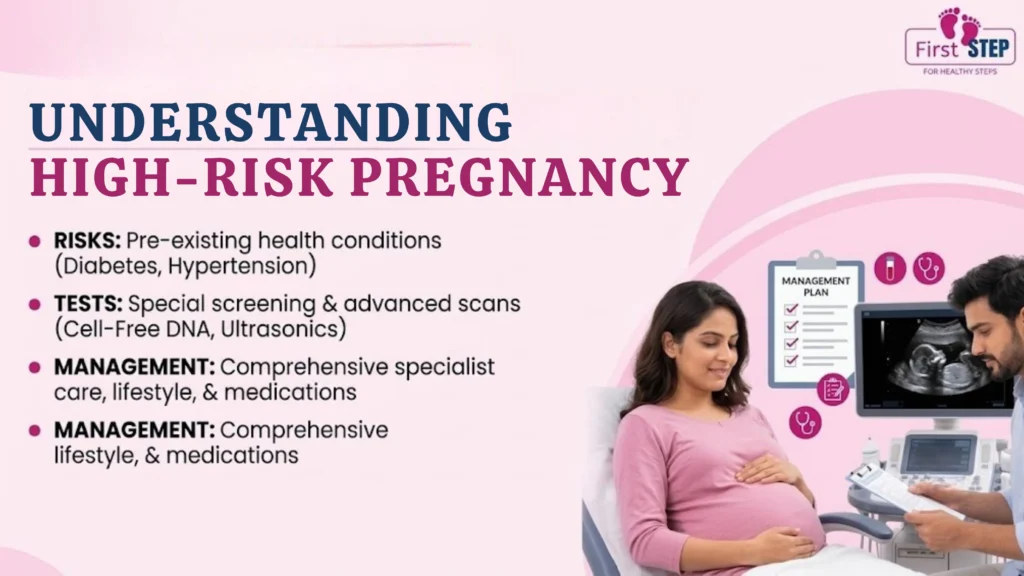



A pregnancy is considered high risk when certain health, age-related, pregnancy-related, or fetal factors increase the chance of complications for the mother or the baby. These can include existing medical conditions, a previous pregnancy complication, twins, or an unusual finding on a scan. A high risk pregnancy does not mean something will go wrong. It simply means closer monitoring and, sometimes, specialist care may help.
What Is a High-Risk Pregnancy?
A high-risk pregnancy is one where the mother, the baby, or both have a higher-than-usual chance of health problems before, during, or after birth. The label describes a possibility, not a certainty. Many women with a high-risk pregnancy go on to have healthy babies.
In routine antenatal care, visits and scans follow a standard schedule. When a pregnancy is classified as high-risk, the schedule is adapted to the individual. This may mean more frequent visits, additional ultrasounds, or input from a fetal medicine specialist alongside your obstetrician.
What Makes a Pregnancy High-Risk?
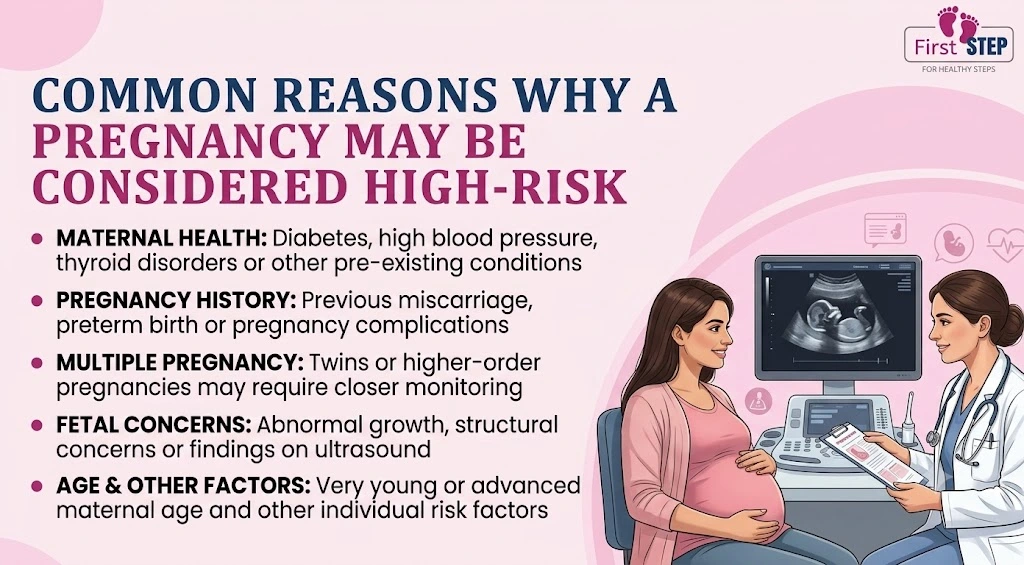
Risk factors usually fall into a few groups: the mother’s age and health, her previous pregnancy history, the type of pregnancy (single or multiple), findings on ultrasound or screening, and complications that develop during the pregnancy itself. Having one factor does not define your pregnancy. Doctors look at the whole picture.
1. Maternal Age
Pregnancy after 35 is often called advanced maternal age, and pregnancy in the teenage years may also need extra attention. With age, the chances of conditions such as high blood pressure, gestational diabetes, and chromosomal changes in the baby can rise. In teenagers, factors like nutrition and access to antenatal care may matter more. Age alone is not a diagnosis. Many women in these groups have uncomplicated pregnancies.
2. Existing Medical Conditions
Conditions present before pregnancy can affect it, including diabetes, high blood pressure, thyroid disorders, heart disease, kidney disease, and autoimmune conditions such as lupus. The level of risk depends on the specific condition and how well it is controlled. Planning ahead through preconception counselling can help make pregnancy safer for many women.
3. Previous Pregnancy Complications
A history of miscarriage (especially repeated), stillbirth, preterm birth, a baby with a fetal condition, or pregnancy-related high blood pressure may lead doctors to monitor a new pregnancy more closely. This is a precaution. A previous complication does not mean the next pregnancy will have the same outcome.
4. Multiple Pregnancy
Twins, triplets, or more are generally monitored more closely. Babies may grow at different rates, share a placenta in some twin pregnancies, or be born earlier than expected. Regular growth scans and placental assessment are a key part of multiple pregnancy care.
5. Abnormal Ultrasound Findings
A scan may show a structural finding, slow growth, a placenta in an unusual position or with an unusual appearance, or too much or too little amniotic fluid. These findings do not always mean a serious problem, but they often need a closer look. Advanced fetal ultrasound or a second opinion on fetal ultrasound findings can help clarify what a finding means.
6. Genetic or Chromosomal Concerns
Concerns may arise from an abnormal screening result, a family history of a genetic condition, or a previous pregnancy affected by a chromosomal or genetic condition.
It helps to know the difference between two types of tests. Screening tests, such as blood tests and the first trimester scan, estimate the chance of a condition but cannot confirm it. Diagnostic tests, such as CVS or amniocentesis, can confirm or rule out specific conditions, and are offered only when clinically indicated. Genetic counselling helps families understand their options before deciding.
7. Pregnancy-Related Complications
Some risks appear only after pregnancy begins. These include gestational diabetes, high blood pressure in pregnancy (such as preeclampsia), placental problems, and fetal growth restriction, where the baby is not growing as expected. These conditions usually call for additional monitoring and a clear care plan.
What Are the Risk Factors for a High-Risk Pregnancy?
| Risk Factor | Why It May Require Closer Monitoring |
| Age 35 or above, or a teenage pregnancy | May be linked to a higher chance of certain complications |
| Diabetes or high blood pressure | Can affect baby’s growth and mother’s health if not well controlled |
| Thyroid, heart, kidney, or autoimmune disease | May need medicine review and coordinated care |
| Previous miscarriage, stillbirth, or preterm birth | Helps doctors plan monitoring and preventive steps |
| Twins or higher-order multiples | Growth, placenta, and timing of birth need closer follow-up |
| Abnormal scan or screening result | Needs further assessment to understand its significance |
| Gestational diabetes or preeclampsia | Needs regular checks to protect mother and baby |
How Is a High-Risk Pregnancy Monitored?
Monitoring depends on the individual pregnancy. Not every high-risk pregnancy needs every test. Depending on the situation, care may include:
- Regular antenatal visits and blood pressure checks
- Blood tests, including sugar and thyroid levels
- Ultrasound scans and fetal growth assessment
- Doppler studies to check blood flow, when indicated
- Genetic screening or testing, when appropriate
- A fetal wellbeing assessment to check how the baby is doing
Monitoring helps identify concerns early so they can be managed, but it cannot prevent every complication. Where several specialists are involved, coordinated multidisciplinary care keeps the plan clear for the family.
When Should You See a High-Risk Pregnancy Specialist?
Consider a consultation if you have a medical condition that may affect pregnancy, a history of pregnancy loss or preterm birth, a twin pregnancy, or an unclear scan or screening result. You can also seek an opinion if you simply want reassurance about your pregnancy plan. Ideally, planning begins early, even before conception, but a consultation is useful at any stage.
If you are looking for a high risk pregnancy specialist in Bhubaneswar, Dr. Rajeeb Jena sees patients for high-risk pregnancy consultation at First Step Clinic. The clinic is convenient for families in Kalarahanga, Raghunathpur, and along Nandankanan Road. You can also read more about the doctor.
Does a High-Risk Pregnancy Mean Something Will Go Wrong?
No. High-risk classification is about increased possibility, not certainty. It allows your care team to watch more closely, pick up changes early, and act in time if needed.
Every pregnancy is different. Two women with the same risk factor can have very different experiences, so assessment should always be individual.
Final Takeaway
A high-risk pregnancy is one that may benefit from closer monitoring because of specific factors, and the label does not predict the outcome. Understanding your own risk factors helps you take part in decisions about your care.
If you have questions about your pregnancy or a recent scan result, a specialist evaluation can offer clarity. You are welcome to contact First Step Clinic to discuss your situation.
Frequently Asked Questions
1. What makes a pregnancy high risk?
A pregnancy may be high risk because of the mother’s age, an existing medical condition, a previous pregnancy complication, twins or more, abnormal scan findings, genetic concerns, or complications that develop during pregnancy. Each factor is assessed individually.
2. When is pregnancy considered high risk?
A pregnancy is considered high risk when one or more factors raise the chance of complications for the mother or baby. This may be known before pregnancy or identified during antenatal visits, scans, or tests.
3. Does age make pregnancy high risk?
Age can influence risk, particularly after 35 and sometimes in teenage pregnancy. However, age alone does not mean a pregnancy will have problems. Doctors consider age together with overall health and pregnancy history.
4. Is twin pregnancy considered high risk?
Twin pregnancies are generally monitored more closely because of differences in growth, placental sharing, and the chance of earlier birth. Many twin pregnancies progress well with regular scans and checks.
5. Can medical conditions cause a high-risk pregnancy?
Yes. Conditions such as diabetes, high blood pressure, thyroid disorders, heart disease, kidney disease, and autoimmune conditions may affect pregnancy. The risk depends on the condition and how well it is controlled.
6. Is previous miscarriage a high-risk pregnancy?
A single miscarriage often does not make a pregnancy high risk. Repeated miscarriages or other previous complications may lead doctors to suggest closer follow-up. Your doctor can advise based on your history.
7. How is a high-risk pregnancy monitored?
Monitoring is tailored to the individual. It may include regular visits, blood pressure checks, blood tests, ultrasound, growth scans, Doppler studies, and fetal wellbeing assessment, only when clinically indicated.
8. When should I consult a high-risk pregnancy specialist?
Consider a consultation if you have a pre-existing condition, past pregnancy complications, a multiple pregnancy, or an unclear scan or screening result. Early consultation, even before conception, can help with planning.